
1
Patient-Facing Experience
Work directly with children, youth, caregivers, and families while building practical behavioral health experience.
Flexible, purpose-driven work helping children, teens, adults, and families build practical skills, stability, and confidence in everyday life.
A Qualified Mental Health Professional provides hands-on skills training and targeted case management in homes, schools, offices, and community settings.
Work directly with children, youth, caregivers, and families while building practical behavioral health experience.
Caseload options may support part-time, school-friendly, mid-range, or high-performing weekly schedules.
Help clients practice communication, coping, anger management, decision-making, independence, and connection to resources.
Base billable rates plus accelerator opportunities can create strong monthly earning potential based on billable hours.
A Qualified Mental Health Professional provides structured, goal-based support to clients and families.
At McHur Care, QMHPs focus on helping clients improve daily functioning through skills training, case management, crisis planning, care coordination, and progress monitoring.
This is active, practical, community-based support. QMHP work helps clients practice skills they can use at home, at school, and in everyday life.
Teaching and practicing real-world skills that support emotional regulation, communication, independence, and safer decision-making.
Coordinating services, connecting families to resources, reducing barriers, and tracking progress.
Supporting crisis plans designed to promote client, family, and community safety.
Participating in team meetings and helping services stay aligned around the client’s needs.
Therapy may explore why a behavior or pattern is happening. Skills training focuses on what to do next and gives the client opportunities to practice until that skill becomes more natural.
Explore the Day-to-Day RoleCandidates should have the education, training, communication skills, and organization needed to serve clients well in community settings.
A bachelor’s degree may qualify when coursework is equivalent to a major in a related field.
A strong opportunity for new graduates who want direct client experience while exploring or pursuing advanced degrees.
Highly motivated and organized individuals may succeed as QMHPs while maintaining a class load.
Professionals from education, outpatient facilities, community organizations, and related settings can bring valuable experience to families.
Candidates with qualifying education and strong people skills may find this role a meaningful entry point into behavioral health.
QMHPs provide practical support that helps clients build skills, stabilize during transitions, and connect with needed services.
This is primarily a community-based position with some office work. Services may take place in:
Skills training is structured, goal-based coaching that helps clients learn tools to better manage emotions, behavior, relationships, routines, and daily responsibilities.
QMHPs help clients practice real-world tools in a calm, supportive, and structured way. Sessions may include coaching, modeling, role play, caregiver support, problem-solving, coping practice, and progress review tied to the client’s goals.

Routines, school attendance, chores, organization, and follow-through.
Expressing needs, active listening, repairing conflict, and reducing shutdown or blow-up patterns.
Peer interaction, boundaries, and coping with bullying or social stress.
Pause-and-plan skills, cause-and-effect thinking, and safer choices.
Identifying triggers, de-escalation steps, and stopping to think before acting.
Healthy leisure, transportation skills, money awareness, and job-readiness behaviors as age appropriate.
Understand what is happening at home, school, and in the community, then identify skill gaps affecting daily functioning.
Teach and practice targeted skills using real situations the client is currently facing.
When appropriate, coach caregivers on consistent responses and ways to reinforce skills between sessions.
Monitor skill gains, update the plan, and focus on measurable improvement.
Targeted Case Management is structured, goal-based care coordination.
It helps individuals and families access needed services and supports, including medical, behavioral health, school-based, and community resources.

Because QMHP work is community-based, support often happens in the real environments where clients and caregivers are navigating daily routines, school needs, family stressors, and service coordination.
QMHP schedules can vary based on caseload, client needs, travel, availability, documentation, productivity, and billable service hours.
| Monthly Billable Hours | Example Accelerator | Example Effective Rate | Candidate Fit |
|---|---|---|---|
| 0–40 hours | +$4/hour | $30–$32/hour | Lower-hour, part-time, or flexible caseload |
| 61–80 hours | +$5/hour | $31–$33/hour | Balanced mid-range schedule |
| 101–120 hours | +$7/hour | $33–$35/hour | High performer schedule |
| 121+ hours | +$9/hour | $35–$37/hour | Elite performer schedule |
Accelerators are applied retroactively to monthly billable hours and paid on the first paycheck of the following month.
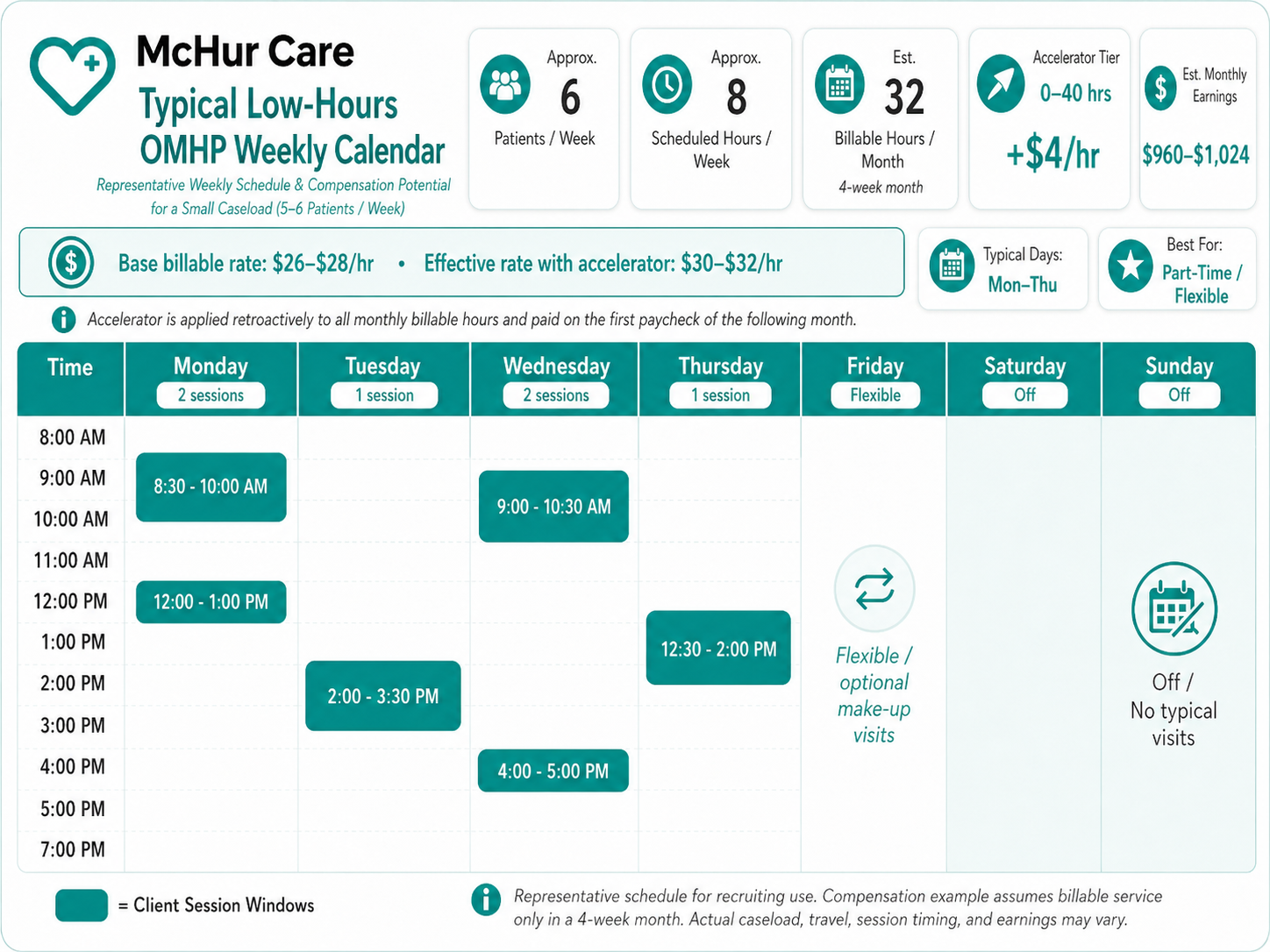
Best for part-time or flexible candidates who want meaningful client work while maintaining a lower-hour schedule.
Typical days: Monday–Thursday, with Friday flexible or optional for make-up visits.
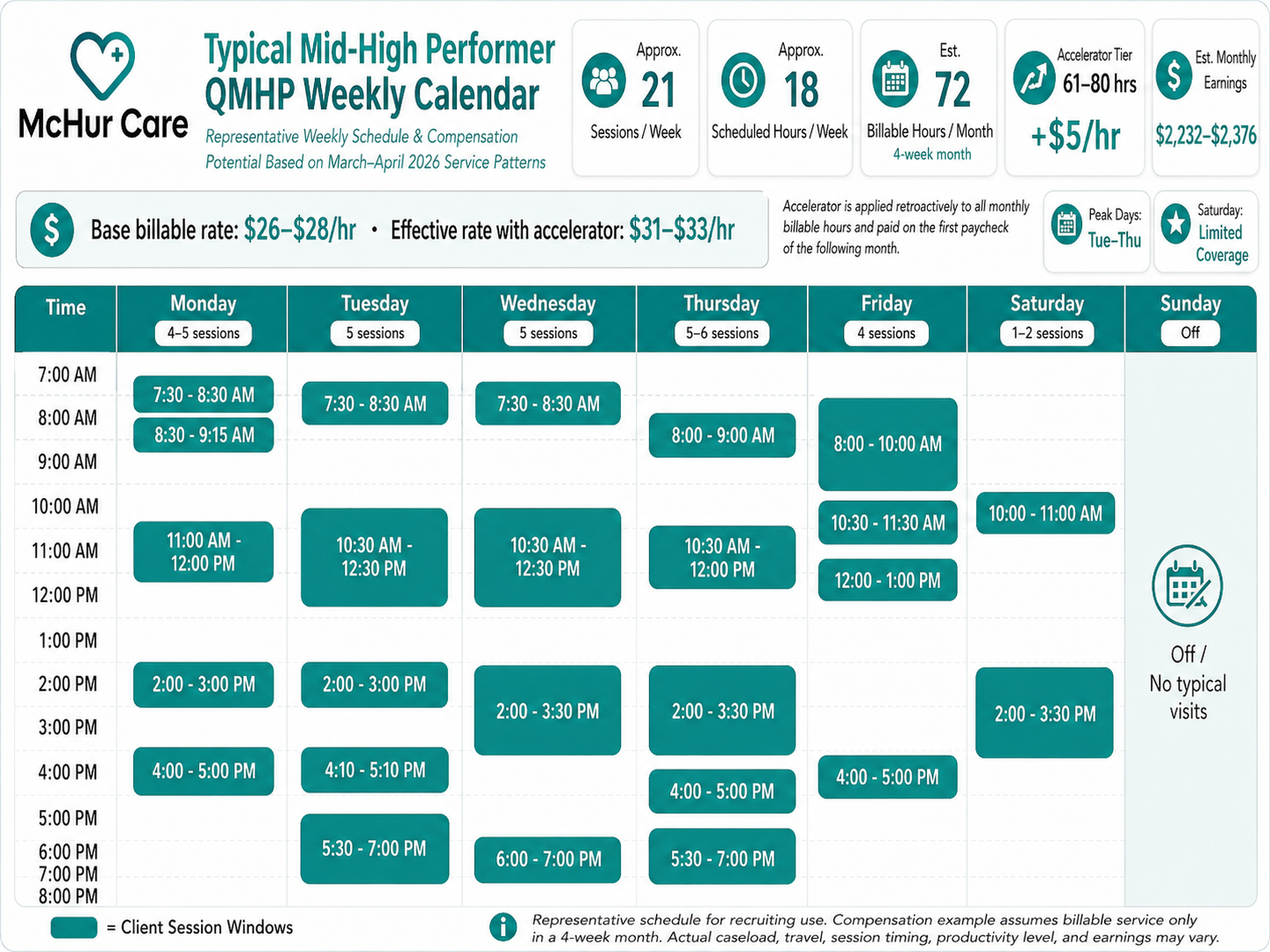
Best for candidates seeking a balanced but productive weekly rhythm with consistent client sessions.
Peak days: Tuesday–Thursday. Saturday: limited coverage.
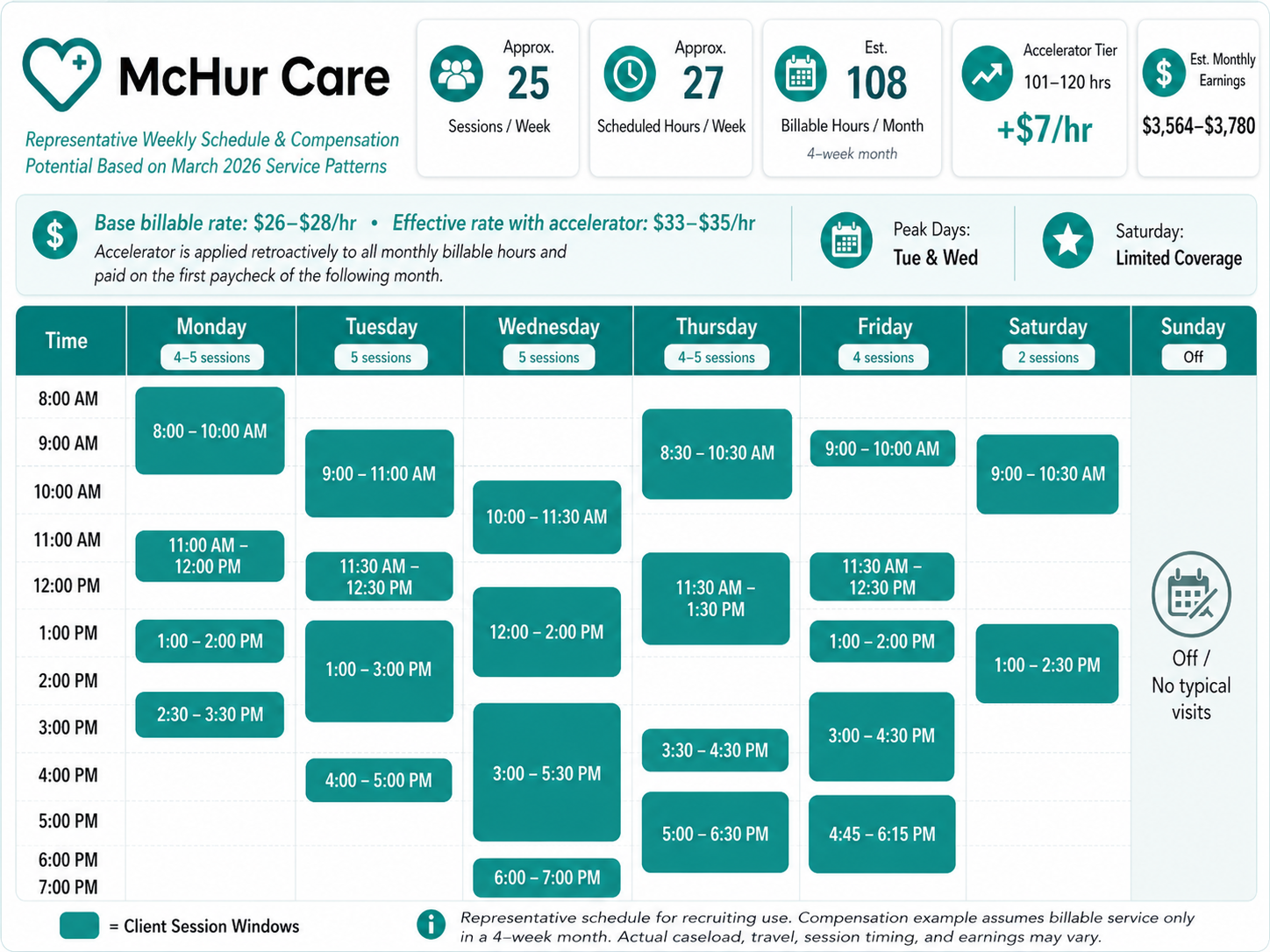
Best for high-output candidates with stronger weekly availability and strong earning potential.
Peak days: Tuesday and Wednesday. Saturday: limited coverage.
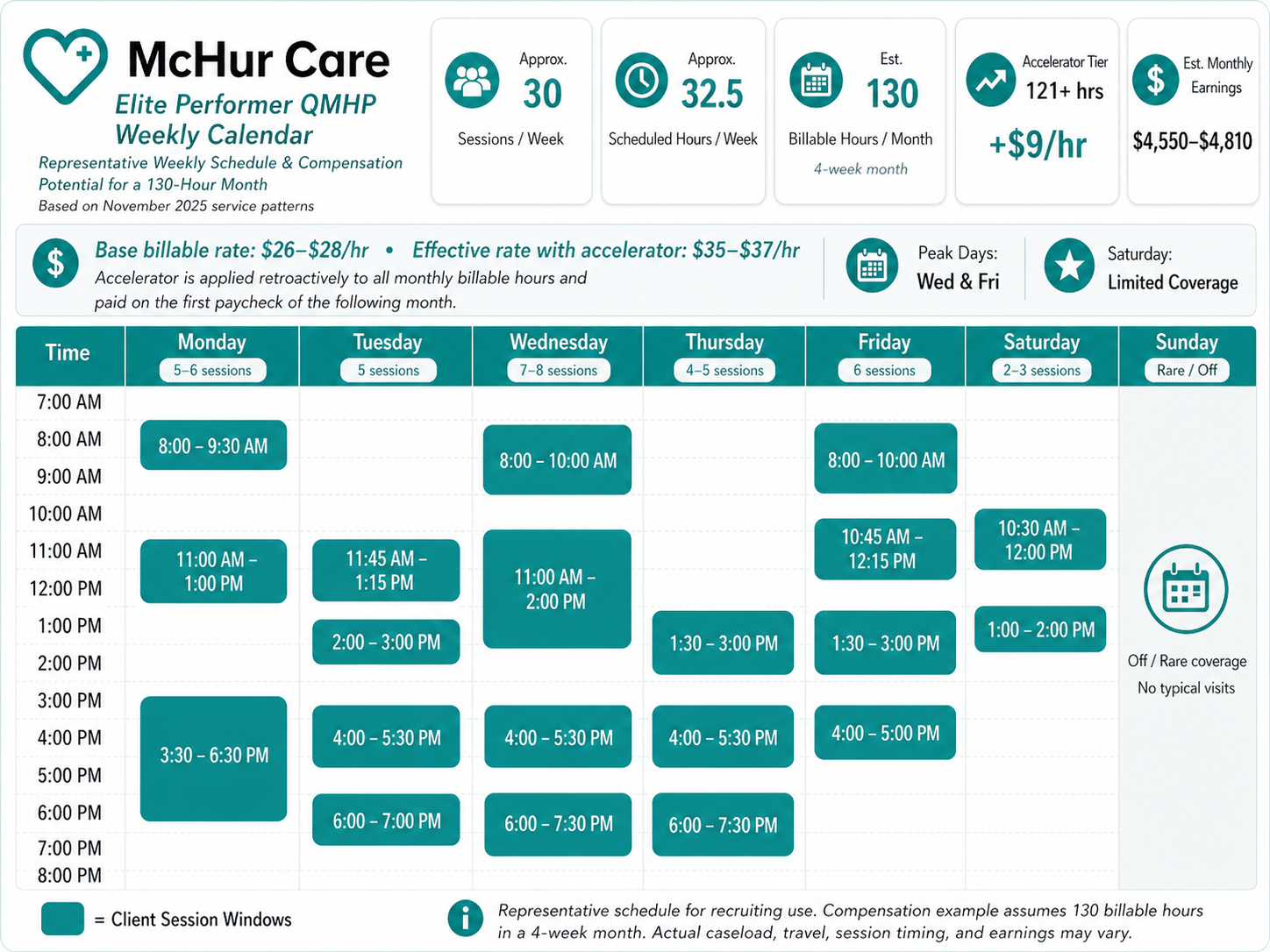
Best for high-productivity candidates seeking maximum monthly billable-hour potential.
Peak days: Wednesday and Friday. Sunday: rare or off.
Whether you are looking for part-time flexibility, patient-facing experience, or a high-performance schedule, McHur Care offers QMHP opportunities with meaningful impact and clear earning potential.
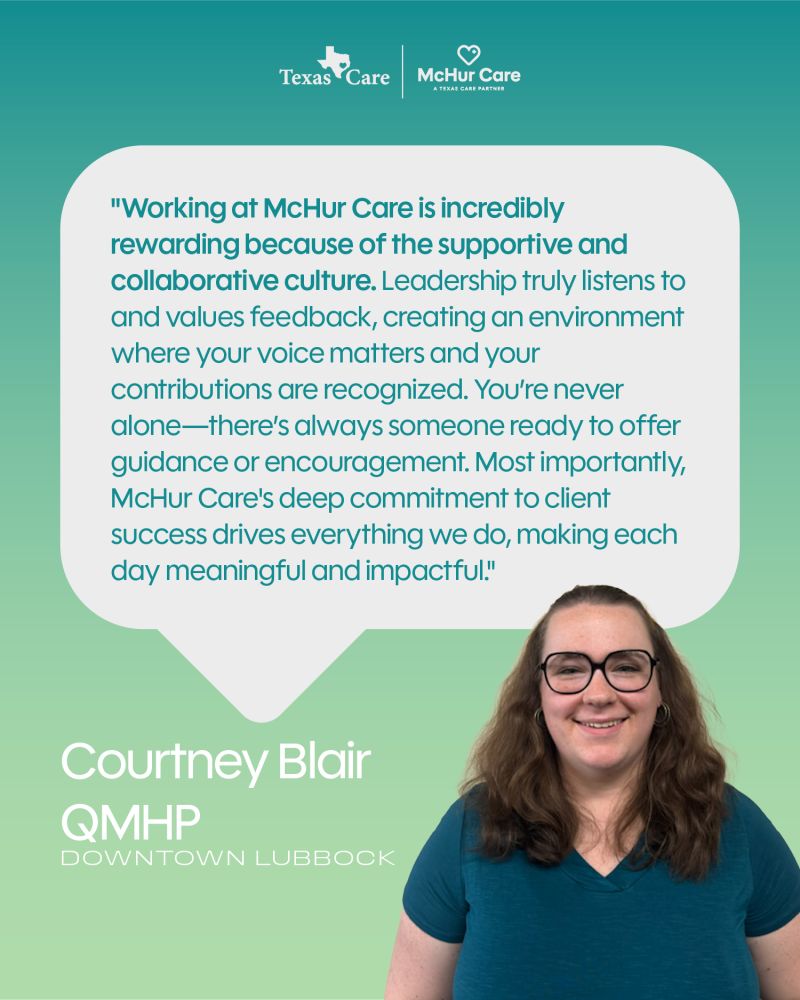
McHur Care’s supportive, collaborative culture helps QMHPs feel connected to the work, the team, and the clients they serve.
Apply NowUse this section to answer common recruiting questions and help candidates quickly decide whether to apply.
A QMHP is a Qualified Mental Health Professional. QMHPs provide structured support such as skills training, targeted case management, crisis planning, care coordination, and progress monitoring.
A QMHP works directly with clients and families to build practical skills, support care coordination, help stabilize clients during transitions, participate in recovery planning, and document services accurately.
QMHP services are not the same as therapy. Therapy may explore why something is happening; skills training focuses on what to do next and practices that skill in real life.
Yes. This can be a strong opportunity for new graduates with qualifying degrees who want patient-facing experience while pursuing future clinical, healthcare, education, or behavioral health goals.
Yes. Highly motivated and organized individuals may succeed as QMHPs while maintaining a class load, especially with a schedule model that matches their availability.
Yes. McHur Care values experienced professionals from education, outpatient facilities, community partner organizations, and related settings.
Candidates generally need a qualifying bachelor’s degree from an accredited college or university with coursework equivalent to a major in a related field such as psychology, social work, counseling, healthcare, education, human development, rehabilitation, or other approved areas.
Staff administering assessment instruments must have current CANS or ANSA certification, as applicable. For McHur Care, this certification is required within 30 days of employment or before seeing patients.
Yes. The role requires a valid Texas driver’s license, auto insurance, and reliable transportation because QMHPs meet clients in homes, schools, offices, and community settings.
Sessions may occur in family homes, schools, offices, and community settings depending on client need and service requirements.
Earnings vary based on billable hours, caseload, schedule, travel, documentation, productivity, and accelerator tier. McHur Care example schedules show monthly earning examples ranging from lower-hour flexible models to elite performer models.
Apply through McHur Care’s career portal at jobs.appone.com/McHur-Care.
If you are organized, compassionate, reliable, and ready to help clients practice real-world skills, we would like to hear from you.
Not sure if your degree or experience qualifies? Apply anyway. McHur Care can review your qualifications through the application process.